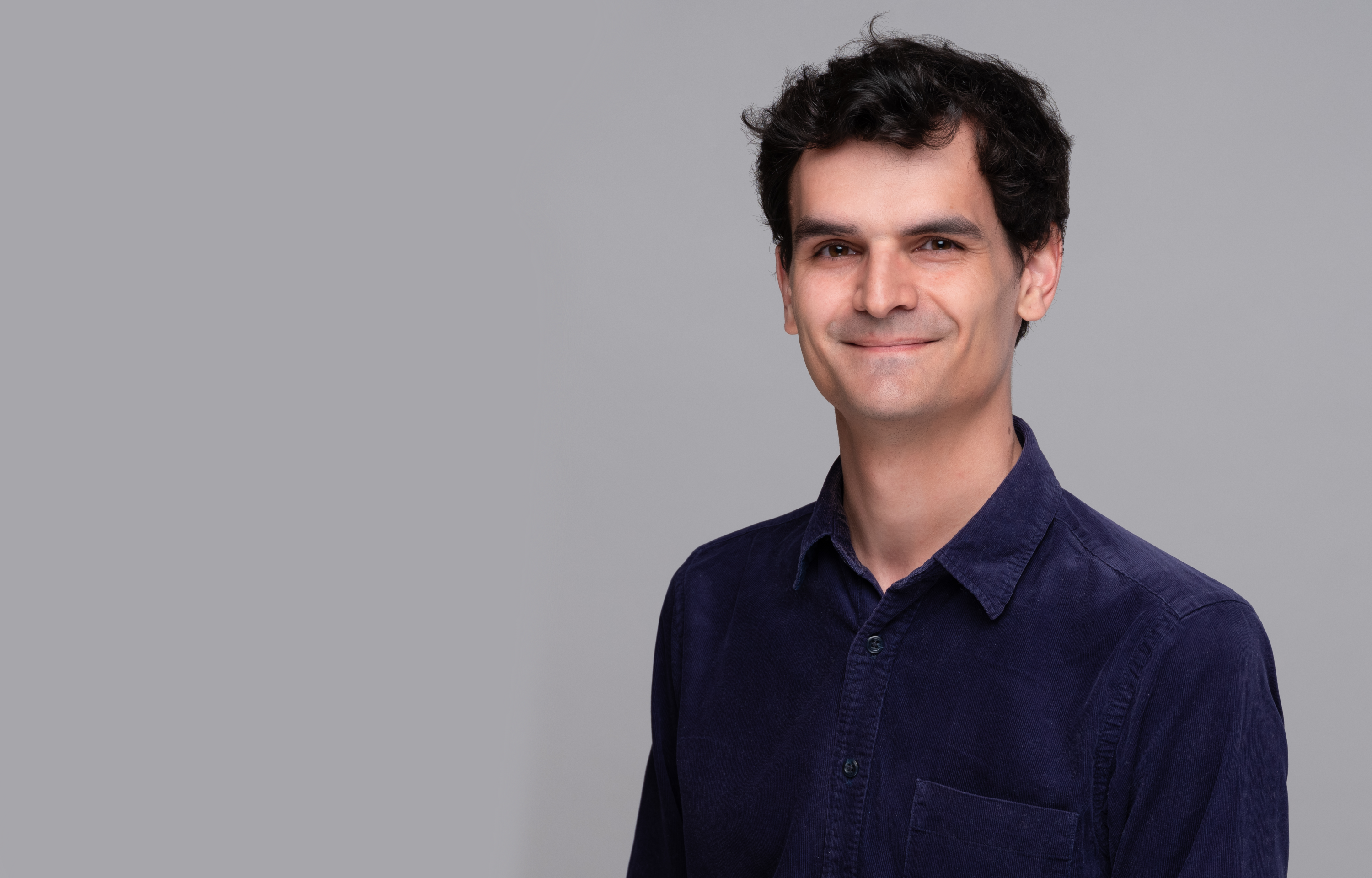
I am a sociologist, Maître de conférences (Associate Professor) in Anglophone Studies at Université Paris Cité – IUT de Paris Rives de Seine.
My work aims to develop a political sociology of secondary groups. My research rests on two strands: on one side, the study of the secondary groups known as “communities” in contemporary societies; on the other, the study of the contradictory aspirations that characterise secondary socialisation, through the particular type of politicization that manifests itself in the passage to adulthood.
Most of my research revolves around the idea that there is a properly modern form of community, which is reducible neither to the continuation of the traditional “community/society” dichotomy, nor to the idea that any social bond, within highly differentiated societies, can present a “community” dimension. Conversely, the specificity of modern communities becomes visible through the integration conflicts to which the motif of “communities” increasingly points within contemporary societies.
Most of my investigations have also led me to highlight the particular type of social problems that crystallize the passage to adulthood — residential mobility, occupational specialization, gender emancipation, exit from delinquency, and generational positioning. I am interested in how these issues surrounding younger generations and their aspirations, particularly in disadvantaged urban neighbourhoods, help make visible a certain relationship to politics.
Crossing these two strands leads me to address different objects. I am primarily a specialist of Northern Ireland, of community relations between unionists and nationalists in Belfast, and of the public issues that characterise the Northern Irish peace process. More recently, I have also focused on the study of enemisation and radicalization processes, investigating States’ efforts at categorizing and managing domestic threats in several countries — notably France, the United Kingdom and the United States. Finally, my research also encompasses a more general interest in the sociology of knowledge, and in how the social sciences have attempted to account for the role of conflictuality in the transformations of social organization.
From this perspective, my work also contributes to a political sociology of conflictuality — and to understanding how social actors appropriate the paradoxical relationship that conflictuality maintains with the growth of social differentiation and integration.
From a methodological point of view, I develop a “processual ethnographic” approach. This consists in stressing, from the field and right through to the analysis, the complementarity between ethnographic fieldwork, controversy analysis and figurational sociology. In parallel, I am interested in the new methods used in digital data collection, analysis and visualization.
field of research
- General sociology
- Urban sociology
- Political sociology
- Sociology of public problems
- Sociology of communities
- Sociology of the British Isles
- Sociology of knowledge
- Eliassian sociology
- Sociology of law
qualifications
French “Conseil National des Universités”
— Qualified as a Lecturer in Section 19 (Sociology, demography), 2022 session.
— Qualified as a Lecturer in Section 11 (English and Anglo-Saxon Languages and Literature), 2022 session.
— Qualified as a Lecturer in Section 4 (Political Science), 2023 session.
affiliations
— Member of the Norbert Elias Foundation, the AFS, the IPSA and the AFSP.
— Member of the G.I.S EIRE since 2024.
— Editor at Sociological Futures (Routledge), attached to the British Sociological Association, since 2023.
— Member of the ECHELLES research unit (UMR 8264) since 2024.
— Associate member of the Laboratoire Interdisciplinaire d’Études sur les Réflexivités – Fonds Yan Thomas (UMR 8065) since november 2021.